Synthwave 1950
Why Synthwave1950?
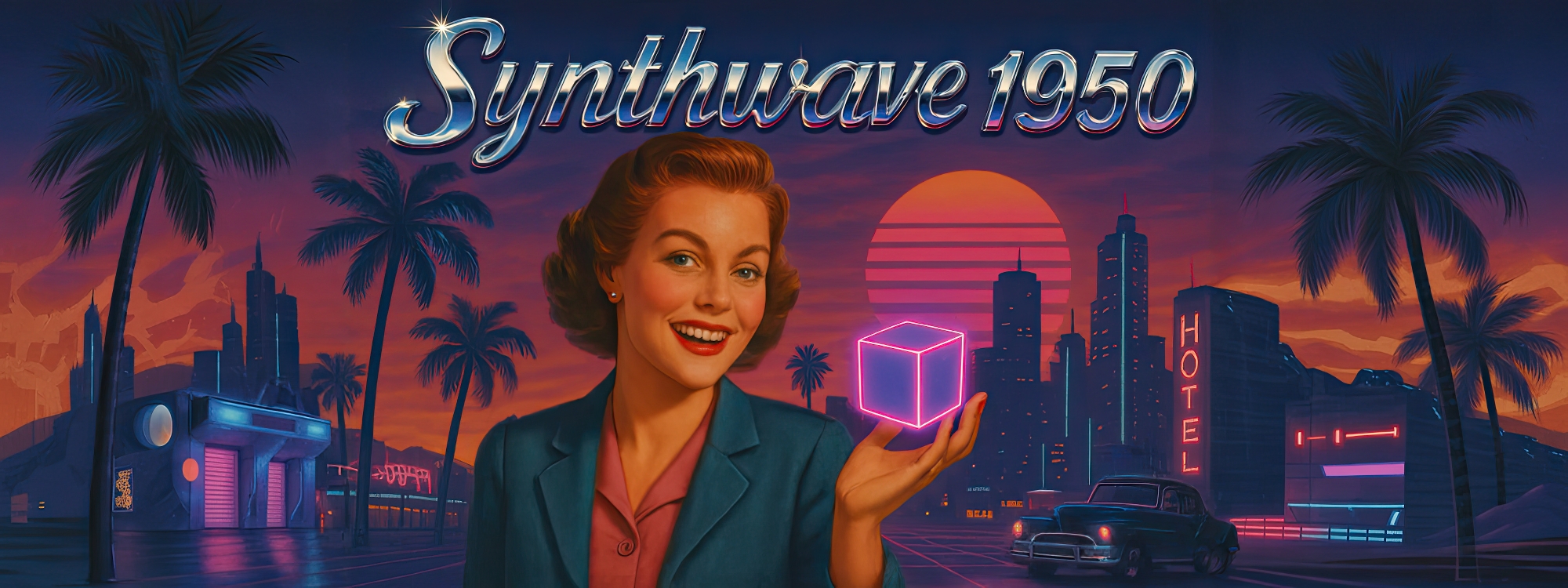
This is a question we get asked a lot… After all, the synthwave style—with its neon lights and retro-futuristic aesthetics—originated in the 1980s, not the 1950s. And that’s absolutely true.
The name “Synthwave 1950” was chosen because it represents an eclectic fusion of contrasting stylistic elements. Synthwave and the 1950s may seem like an odd match, but together they create a unique visual language that bridges eras.
We are deeply inspired by the retro travel posters of the 1950s—the golden age of aviation. It was a time when intercontinental flights became faster, more accessible, and infinitely more glamorous. Passengers could smoke in the cabin, sip champagne mid-flight, and marvel at the miracle of jet-powered travel. Posters from that era are soft in color, romantic in tone, and evoke a dreamy nostalgia. They feel like sun-warmed paper and optimism frozen in ink.
At the same time, the aesthetics of the 1980s shaped our youth: neon signs, arcades, cyberpunk visions of the future. Glossy magazines filled with bold typography and the unforgettable scent of fresh print. Movies that transported us to distant worlds. A spirit of boldness, imagination, and high-tech hope.
We bring these two worlds together—mid-century warmth and neon-lit fantasy—into a single visual identity. That’s why at Synthwave 1950, you’ll find both dreamy retro travel posters and electric synthwave prints.
We see our work as a celebration of nostalgia, not bound by a single decade but enriched by many. It’s about the beauty of cultural memory, reimagined through design. We create visuals that feel both familiar and futuristic, comforting and daring. Our designs aim to transport you—through time, space, and emotion. If you’ve ever felt the magic of boarding a plane or stepping into an arcade, you’ll feel at home here.
Synthwave 1950 isn’t about historical accuracy—it’s about atmosphere, feeling, and storytelling. It’s a tribute to the beauty of bygone dreams and imagined futures. And we’re just getting started.